Importing products from Germany can be highly profitable, but understanding the licenses required is the first step to avoiding customs delays, penalties, and rejected shipments.
Germany is part of the European Union Customs Union, which means many import rules are governed at the EU level. In most cases, there is no universal “Germany import license” for every product, but some categories absolutely require permits, certificates, or pre-clearance approvals. The exact licenses required depend on your product type, destination country, and intended use. Official EU databases like TARIC help identify product-specific restrictions.
If you are a beginner, this guide will walk you through everything in simple English.
Table of Contents
- Do You Need a License to Import From Germany?
- Main Licenses Required for Importing
- Product Categories That Need Special Permits
- Step-by-Step Process to Check Licenses Required
- Common Mistakes to Avoid
- Expert Tips for Faster Customs Clearance
- FAQs
- Conclusion
Do You Need a License to Import From Germany?
The short answer: sometimes.
Germany exports under EU customs laws, so whether you need import permissions depends on:
- Product HS code / TARIC code
- Your destination country laws
- Whether the product is regulated
- Safety and compliance standards
- Product origin and sanctions rules
- Quantity and commercial purpose
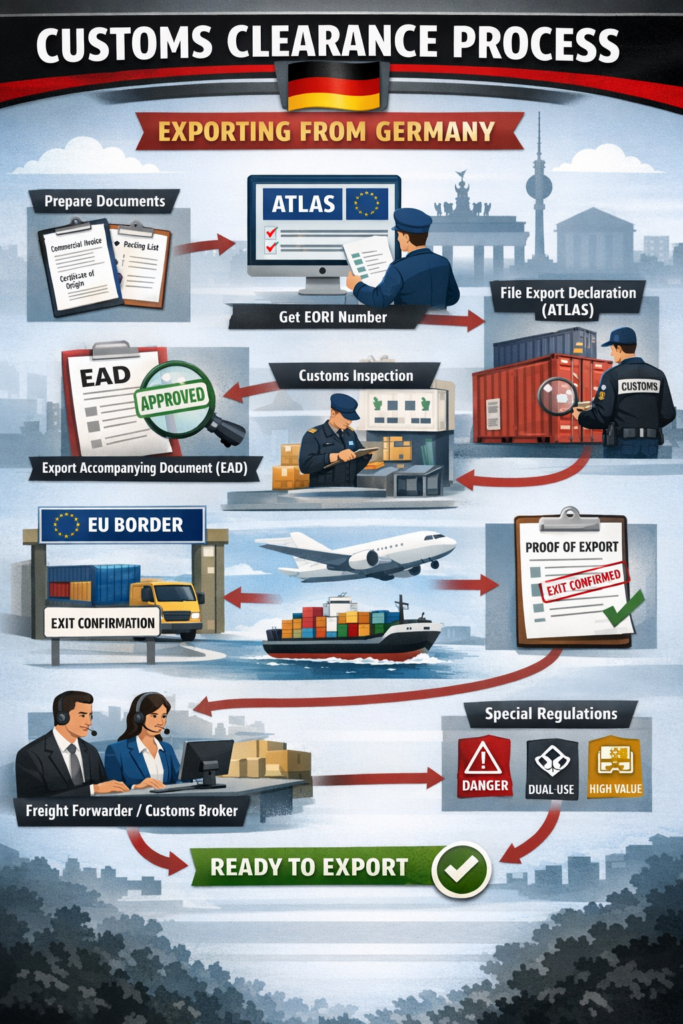
A general commercial shipment usually needs:
- Commercial invoice
- Packing list
- Bill of lading / airway bill
- Customs declaration
- EORI number
- Product-specific licenses (if regulated)
An EORI number is one of the most important customs registrations for businesses trading with the EU.
Main Licenses Required to Import From Germany
1) EORI Registration (Most Important)
The most common licenses required for business imports is actually EORI registration.
EORI = Economic Operators Registration and Identification
You need this if:
- You are importing commercially into the EU
- Your freight forwarder files customs entries
- You use Germany as the first EU entry point
- You act as importer of record
Without EORI, customs clearance usually stops.
2) Product-Specific Import Licenses
Some products need special regulatory approval.
Examples include:
- Medical devices
- Pharmaceuticals
- Chemicals
- Food products
- Cosmetics
- Animal products
- Plants and seeds
- Steel and iron
- Dual-use electronics
- Military-related goods
- Cultural goods
- Waste or recyclable materials
The EU specifically notes that restricted goods may require import licenses, inspection certificates, veterinary certificates, or phytosanitary documents.
3) CE Compliance and Safety Documentation
Some products don’t need a classic import license, but they still require:
- CE marking
- Declaration of conformity
- Lab test reports
- Product safety certificates
- Technical file
- User manual compliance
- Packaging compliance
This is common for:
- Electronics
- Machinery
- Toys
- PPE
- Consumer appliances
This is often where many importers get confused.
Product Categories That Usually Need Special Licenses
| Product Type | License/Permit Needed | Authority |
|---|---|---|
| Food & beverages | Health / sanitary permit | Local food authority |
| Cosmetics | Ingredient compliance | EU cosmetics rules |
| Chemicals | REACH / SDS compliance | EU chemicals authority |
| Plants | Phytosanitary certificate | Agriculture authority |
| Animal products | Veterinary certificate | SPS authority |
| Medical devices | Regulatory registration | Health authority |
| Steel products | Import surveillance | Customs / trade authority |
Step-by-Step Process to Check Licenses Required
Step 1: Identify the HS / TARIC Code
Start with the exact product classification.
This determines:
- Duty rate
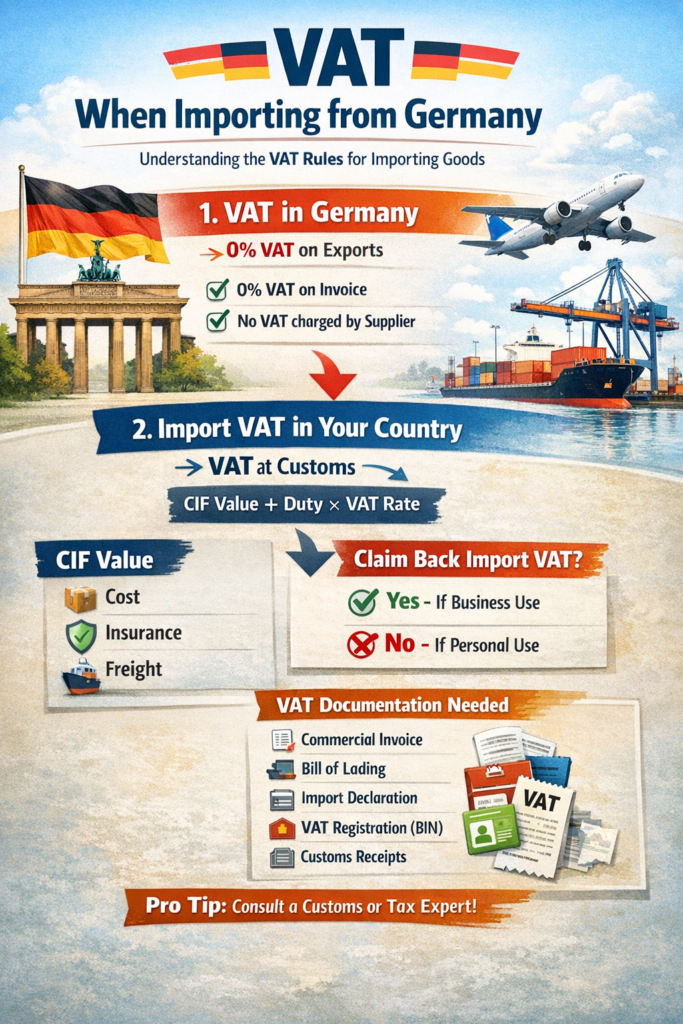
- VAT
- Anti-dumping duty
- Import quotas
- License requirements
- Product restrictions
Use official TARIC lookup for accuracy.
Step 2: Check Restricted Product Rules
Review whether your item falls under:
- SPS controls
- CE regulations
- Controlled goods
- Environmental compliance
- Dual-use regulations
- Brand/IP restrictions
Step 3: Confirm Destination Country Rules
If you import from Germany into:
- Bangladesh
- USA
- UK
- UAE
- Canada
you must also follow your own country’s import licensing laws.
For example, Bangladesh may require:
- IRC (Import Registration Certificate)
- BIN / VAT registration
- BSTI approval
- Drug license
- Plant quarantine clearance
depending on the product.
Step 4: Ask Your Freight Forwarder or Customs Broker
A good broker can instantly verify:
- Which licenses required
- Whether pre-shipment inspection is needed
- Customs duty estimates
- Restricted documents
- Delivery timeline
This reduces risk dramatically.
Common Mistakes Importers Make
Wrong Product Classification
A wrong HS code can trigger:
- Wrong duty
- Missing license
- Customs seizure
- Delays
- Penalties
Assuming All Goods Need One License
There is no single master import license for all German goods.
The licenses required change by product.
This is why TARIC lookup is essential.
Ignoring Local Compliance
Many importers only focus on Germany and forget destination compliance.
Example:
A cosmetic item may legally leave Germany but still fail Bangladesh registration.
H2: Expert Tips for Smooth Importing
Pro Tips
- Always request HS code from German supplier
- Verify CE and conformity documents before payment
- Use CIF or DDP carefully
- Ask for product test reports
- Check sanctions or restricted origin components
- Use cargo insurance
- Keep digital copies of all licenses
Real Use Case
A Bangladeshi electronics importer sourcing smart home devices from Germany may need:
- Export invoice from German supplier
- CE compliance docs
- BSTI clearance
- BTRC approval (if wireless)
- IRC
- Customs bond papers
This practical workflow saves time and port charges.
H2: Pros and Cons of Importing From Germany
Pros
- Premium product quality
- Strong compliance culture
- Reliable documentation
- Trusted EU standards
- Lower defect rates
Cons
- Higher documentation requirements
- Strict product compliance
- Possible CE testing costs
- Longer approval for regulated goods
3) FAQ Section
FAQ: Licenses Required to Import From Germany
1) Do all products need import licenses?
No. Only regulated products need specific permits. Many standard goods only need customs documents and EORI.
2) Is EORI mandatory?
Yes, for most commercial EU customs operations.
3) How do I check product license requirements?
Use the official TARIC database with HS code lookup.
4) Do I need licenses in Bangladesh too?
Yes, depending on the product. Germany export rules and Bangladesh import rules both apply.
5) Can a freight forwarder handle licensing?
They can help with customs paperwork, but product-specific permits usually remain your responsibility.
Conclusion
Understanding the licenses required to import from Germany is less about one universal permit and more about product-specific compliance, EORI registration, and destination-country approvals.
The safest approach is:
- Classify the product
- Check TARIC restrictions
- Verify destination laws
- Confirm customs documents
- Use a broker before shipping
This simple process helps you avoid expensive customs mistakes.