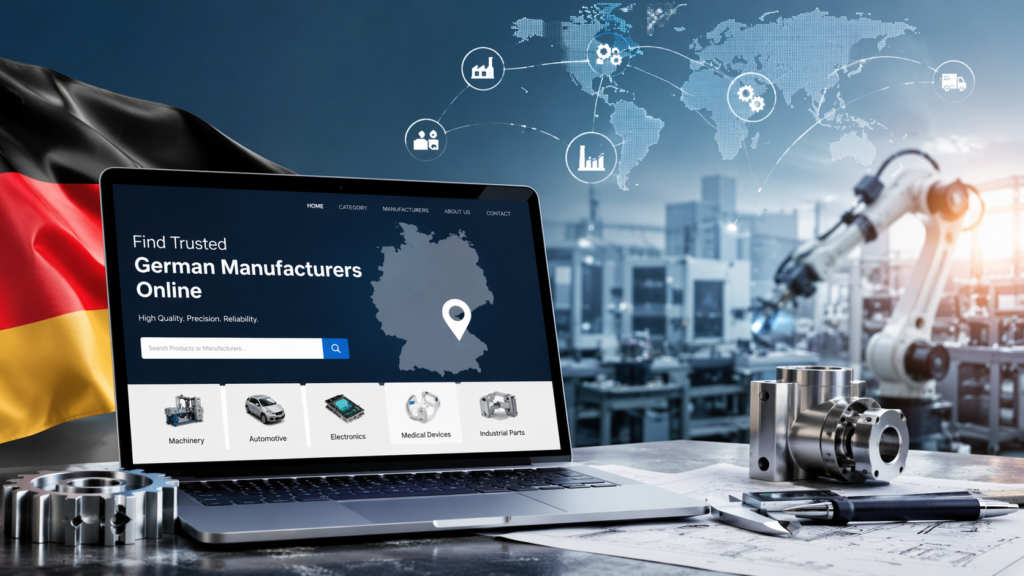
Germany is globally renowned for its high-quality engineering, precision manufacturing, and reliability. However, the prestige of the “Made in Germany” label also attracts sophisticated scammers aiming to take advantage of eager international buyers. Knowing how to spot red flags dealing with German exporters can save your business from devastating financial losses and supply chain disasters.
While the majority of German businesses are highly regulated and trustworthy, the rise of digital B2B fraud means importers must be more vigilant than ever. Whether you are ordering industrial machinery, consumer goods, or automotive parts, you must conduct strict due diligence.
In this guide, we will break down the crucial warning signs to look out for, how to verify a legitimate German supplier, and the actionable steps you need to take before signing any contracts or wiring funds.
Table of Contents
- Why Vetting Your German Supplier is Non-Negotiable
- The Biggest Red Flags Dealing With German Exporters
- Missing or Incomplete “Impressum”
- Unverifiable Handelsregister Number
- Suspicious Payment Requests
- Missing EORI Number and Export Documents
- Vague Supply Chain Transparency (LkSG)
- Legitimate German Supplier vs. Scam Exporter (Comparison)
- Step-by-Step: How to Verify a German Exporter
- Common Mistakes Buyers Make
- Pros and Cons of Sourcing From Germany
- Conclusion
Why Vetting Your German Supplier is Non-Negotiable
When you source products internationally, you carry the risk. Sending large wire transfers across borders based on a few email exchanges is a recipe for disaster. Fraudulent companies often set up professional-looking websites, clone the identities of real German manufacturers, and vanish as soon as a deposit clears.
By identifying the early warning signs of a scam, you protect your capital, ensure your goods clear customs without delays, and build long-term relationships with legitimate partners.
The Biggest Red Flags Dealing With German Exporters
If you encounter any of these warning signs during your negotiations, pause immediately.
1. Missing or Incomplete “Impressum” (Legal Notice)
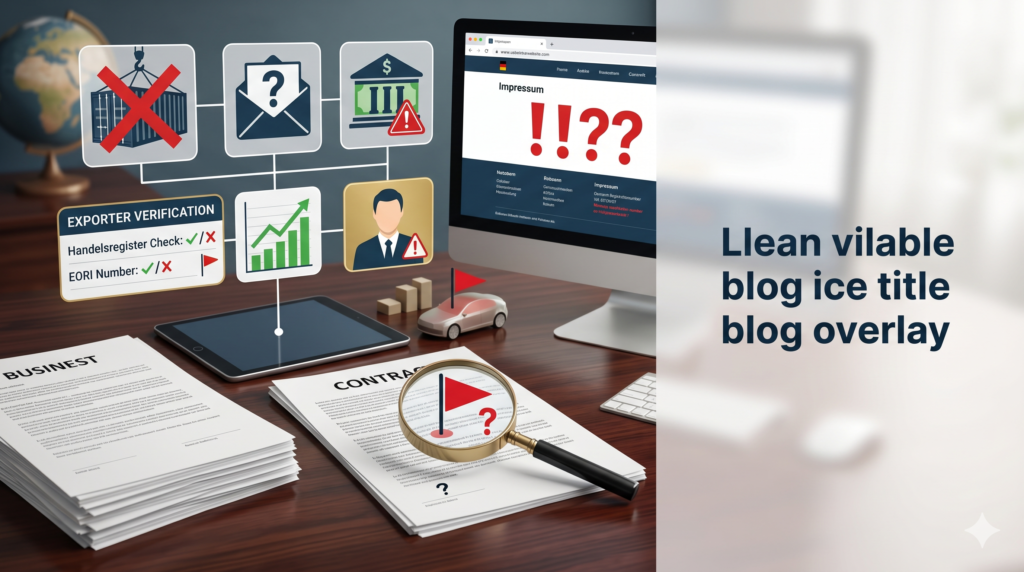
By law, every commercial website in Germany must have an “Impressum” (Legal Disclosure). This page must clearly state the company’s legal name, authorized representatives (Managing Directors/Geschäftsführer), physical registered address, contact details, and their registration number.
- The Red Flag: If a website claiming to be a German supplier has no Impressum, or if the Impressum only lists a PO Box or an overseas address, walk away.
2. Unverifiable Handelsregister Number
Every corporate entity in Germany (like a GmbH or AG) is registered in the Handelsregister (Commercial Register). They are assigned an HRB or HRA number tied to a specific district court (Amtsgericht).
- The Red Flag: The supplier refuses to provide their HRB number, or the number they provide does not match their company name when you search it on the official German business register portal.
3. Suspicious Payment Requests
Legitimate German businesses operate with standard European corporate bank accounts using SEPA and SWIFT systems.
- The Red Flag: The exporter asks for payment via Western Union, cryptocurrency, or requests that you wire funds to an individual’s personal account rather than the corporate entity name. Another major warning sign is being asked to send funds to a bank account located outside of Germany for a company that claims to be entirely German-based.
4. Missing EORI Number and Export Documents
Any business exporting goods outside the European Union must have an EORI number (Economic Operators Registration and Identification number).
- The Red Flag: A supplier claiming extensive export experience but expressing confusion when you ask for their EORI number, EUR.1 movement certificates, or standard Certificates of Origin.
5. Vague Supply Chain Transparency (LkSG)
With the implementation of the German Supply Chain Due Diligence Act (LkSG), large German companies are strictly required to monitor human rights and environmental risks in their supply chains.
- The Red Flag: While smaller companies are exempt, if you are dealing with a supposedly massive, industry-leading enterprise and they cannot provide basic compliance documentation regarding their material sourcing, they may be misrepresenting their size or legitimacy.
Legitimate German Supplier vs. Scam Exporter
Use this quick comparison table to benchmark the company you are communicating with:
| Feature | Legitimate German Supplier | Likely Scam Exporter |
|---|---|---|
| Website Legal Notice | Full “Impressum” with authorized directors listed. | Missing entirely or hidden. |
| Corporate Registration | Verifiable HRB/HRA number in the Handelsregister. | “Not required” or fake registration number. |
| Email Address | Corporate domain matching the website (name@company.de). | Free providers (Gmail, Yahoo) or slight domain misspellings. |
| Payment Terms | Corporate bank account matching the registered entity name. | Personal accounts, offshore accounts, or 100% upfront crypto. |
| Facility Access | Welcomes site visits or third-party audits. | Always “under renovation” or aggressively denies visits. |
Step-by-Step: How to Verify a German Exporter safely
Do not rely on gut feeling. Follow these concrete steps to verify your supplier.
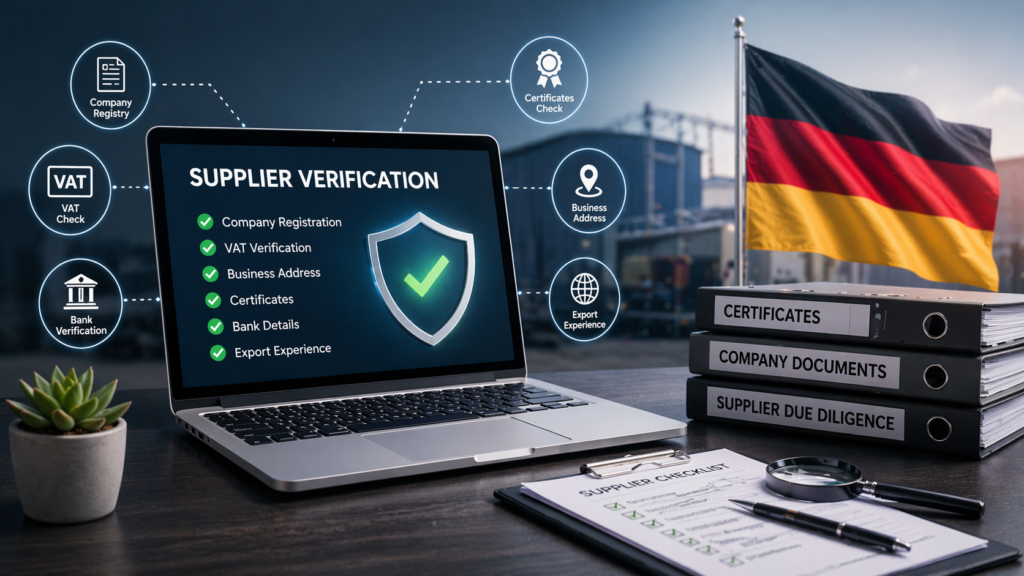
- Search the Official Handelsregister: Go to the official German company register (handelsregister.de). It is free to search. Enter the company name or their HRB number. Confirm that their status is “Active” and that the managing directors match the people you are speaking with.
- Validate the VAT ID: Ask for their USt-IdNr (Value Added Tax Identification Number). Run it through the European Commission’s VIES (VAT Information Exchange System) portal to ensure it is valid and belongs to the company name provided.
- Check the Unternehmensregister: This secondary register aggregates financial filings and insolvency notices. A quick search here can tell you if the company is currently going through bankruptcy proceedings.
- Demand a Video Call and Facility Tour: Scammers hide behind emails. Request a live video call from the factory floor or warehouse. If they constantly make excuses about poor internet or strict confidentiality policies, consider it a dealbreaker.
- Start with a Small Sample Order: Never place a container-sized order on your first attempt. Pay for a small sample run and handle the logistics to test their export capabilities and product quality.
Expert Tip: Watch out for the “UG (haftungsbeschränkt)” corporate structure. A UG is a mini-GmbH that can be formed with as little as €1 in share capital. While many legitimate startups use this, a supplier claiming to be a massive manufacturing powerhouse but operating as a UG is a massive red flag.
Common Mistakes Buyers Make
Even experienced importers fall into traps when rushing a deal. Here is what to avoid:
- Skipping Independent Verification: Trusting the PDF certificates the supplier emails you without verifying them with the issuing body.
- Ignoring Domain Spoofing: Scammers often register a domain that is off by one letter from a real, famous German manufacturer. Always triple-check the email address domain.
- Succumbing to Time Pressure: Fraudsters often claim another buyer is about to take the inventory to force you into wiring a deposit quickly. Legitimate B2B sales in Germany are methodical and structured.
The Pros and Cons of Sourcing from Germany
Before finalizing your import strategy, weigh the realities of the German market.
Pros:
- Exceptional engineering and manufacturing standards.
- Highly reliable logistics and port infrastructure (e.g., Port of Hamburg).
- Strict EU regulatory compliance, meaning safer and certified products.
Cons:
- Premium pricing compared to Asian markets.
- Bureaucratic export processes can sometimes slow down initial shipments.
- Strict labor laws and high operational costs limit room for aggressive price negotiation.
Conclusion
Importing from Europe’s largest economy can dramatically elevate your product offerings, but only if you partner with legitimate businesses. By recognizing the red flags dealing with German exporters—such as missing legal notices, unverifiable registration numbers, and sketchy payment requests—you can confidently navigate the market.
Always take the time to run the company through the Handelsregister, verify their VAT number, and insist on transparency. Due diligence takes a few extra days, but it guarantees peace of mind and profitable, long-term trade relationships.
Ready to streamline your import business? Make sure you secure your supply chain today by partnering with verified sourcing experts.
3. FAQ Section
1. How do I check if a German company is legitimate?
You can verify a German company by searching their name or HRB/HRA number on the official federal portal, handelsregister.de. You should also verify their VAT ID through the EU’s VIES system and check for a legal “Impressum” on their website.
2. What is an Impressum and why does it matter?
An Impressum is a legally required statement of ownership on all commercial websites in Germany. If an exporter’s website lacks an Impressum detailing their corporate address and managing directors, it is highly likely to be a scam.
3. Are German suppliers required to have an EORI number?
Yes. Any business established in the EU that engages in importing or exporting goods with countries outside the EU must have a valid EORI number for customs declarations.
4. What is a UG (haftungsbeschränkt) company?
It is a specific form of a limited liability company in Germany that requires minimal starting capital (as low as €1). While legal, buyers should exercise caution if a supplier claims to be a large-scale manufacturer but is registered as a UG rather than a standard GmbH or AG.
5. What payment methods are safe when dealing with German exporters?
Standard wire transfers to a verified corporate bank account (SEPA/SWIFT) or a Letter of Credit (L/C) for large transactions. Avoid suppliers asking for Western Union, crypto, or payments to third-party personal accounts.