How to Import Products from Germany (Step-by-Step Guide)
Germany is known for its high-quality manufacturing, especially in industries like automotive parts, machinery, electronics, and consumer goods. If you want to build a profitable import business, sourcing products from Germany can be a smart move.
In this guide, I’ll walk you through the exact step-by-step process to import products from Germany—whether you’re a beginner or scaling your business.
Why Import from Germany?
Before we dive into the steps, here’s why Germany is a great sourcing destination:
- High-quality, durable products
- Strong reputation (“Made in Germany”)
- Advanced manufacturing standards
- Reliable suppliers and logistics
Step 1: Choose the Right Product
Start by selecting a product that has demand in your local market.
Tips:
- Research local demand (Daraz, Facebook Marketplace, etc.)
- Focus on niche products (e.g., tools, auto parts, baby products)
- Avoid highly regulated items in the beginning
👉 Example niches:
- Car accessories (BMW, Audi parts)
- Industrial tools
- Kitchen appliances
- Health & beauty products
Step 2: Research the Market
Before importing, validate your idea.
What to check:
- Demand vs competition
- Selling price vs import cost
- Profit margin (at least 25–40%)
Tools you can use:
- Google Trends
- Facebook Ads Library
- Local eCommerce platforms
Step 3: Find Reliable Suppliers in Germany
Now, you need to find trusted suppliers.
Best platforms:
- Alibaba (some German suppliers list here)
- Europages
- Wer liefert was (WLW)
- Amazon Germany (for small-scale sourcing)
What to check:
- Company profile and reviews
- Certifications (CE, ISO, etc.)
- Minimum Order Quantity (MOQ)
- Product samples availability
💡 Always order a sample before bulk purchase.
Step 4: Contact Suppliers and Negotiate
Reach out to multiple suppliers.
Ask about:
- Price per unit
- MOQ
- Production time
- Payment terms
- Shipping options
Negotiation tips:
- Start with smaller orders
- Ask for discounts on bulk
- Compare 3–5 suppliers before deciding
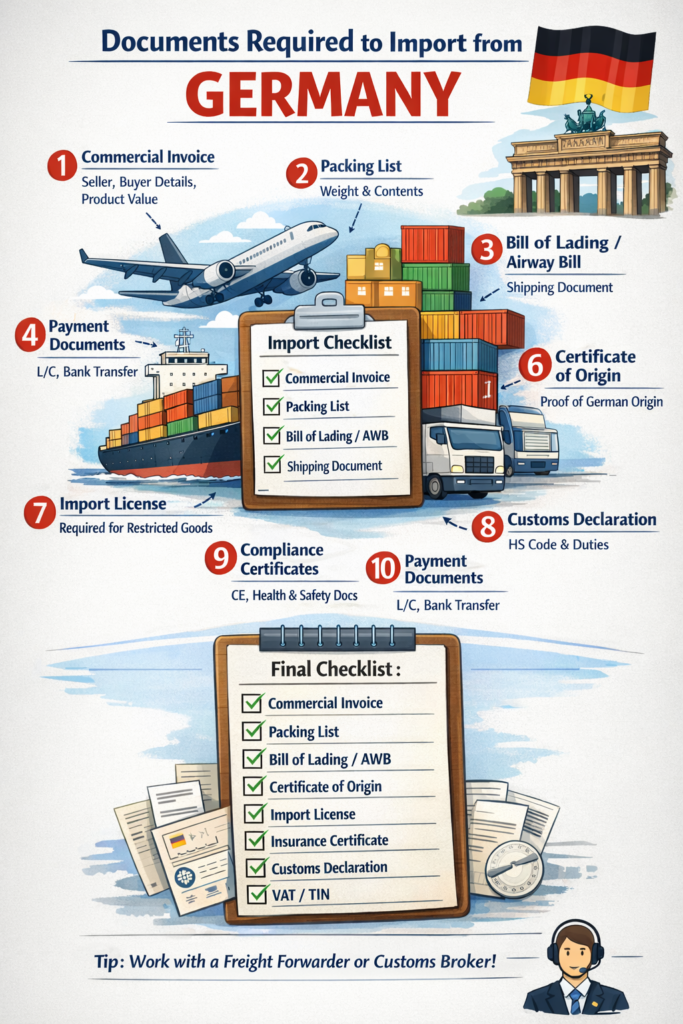
Step 5: Understand Import Regulations
Every country has its own import rules.
In Bangladesh, you need:
- Import Registration Certificate (IRC)
- Trade License
- TIN Certificate
- VAT Registration
You also need to check:
- HS Code of your product
- Import duty & taxes
- Any restrictions or certifications
Step 6: Choose Shipping Method
You have 3 main options:
✈️ Air Freight
- Fast (5–10 days)
- Expensive
- Best for small, high-value products
🚢 Sea Freight
- Cheap for bulk orders
- Slow (20–40 days)
- Best for large shipments
🚚 Courier (DHL, FedEx)
- Easy and beginner-friendly
- Ideal for small orders
👉 Popular logistics companies:
- DHL
- FedEx
- UPS
Step 7: Handle Payment Safely
Common payment methods:
- Bank Transfer (TT)
- PayPal (for small orders)
- Letter of Credit (LC) for large imports
💡 Tip: Start with secure methods like PayPal or small TT payments.
Step 8: Customs Clearance
When your product arrives:
You’ll need:
- Commercial Invoice
- Packing List
- Bill of Lading / Airway Bill
- Certificate of Origin
You can:
- Handle it yourself
- Or hire a clearing & forwarding (C&F) agent
Step 9: Receive and Inspect Goods
Once you receive the products:
- Check quantity
- Inspect quality
- Test functionality
If there are issues, contact your supplier immediately.
Step 10: Sell and Scale
Now the fun part—selling!
Platforms:
- Facebook Shop
- Your own WordPress site (great for you 👀)
- Daraz
Scaling tips:
- Reorder fast-moving products
- Build a brand
- Improve packaging
- Run ads
Final Thoughts
Importing from Germany can be highly profitable if you follow the right process. Start small, test your market, and gradually scale your business.
Quick Summary
- Choose a product
- Research demand
- Find suppliers
- Negotiate
- Understand legal requirements
- Choose shipping
- Make payment
- Clear customs
- Inspect goods
- Sell and scale